
How to Turn an Illegal Finished Basement Into a Legal Basement Apartment in London, Ontario (Start Earning Rental Income Safely)
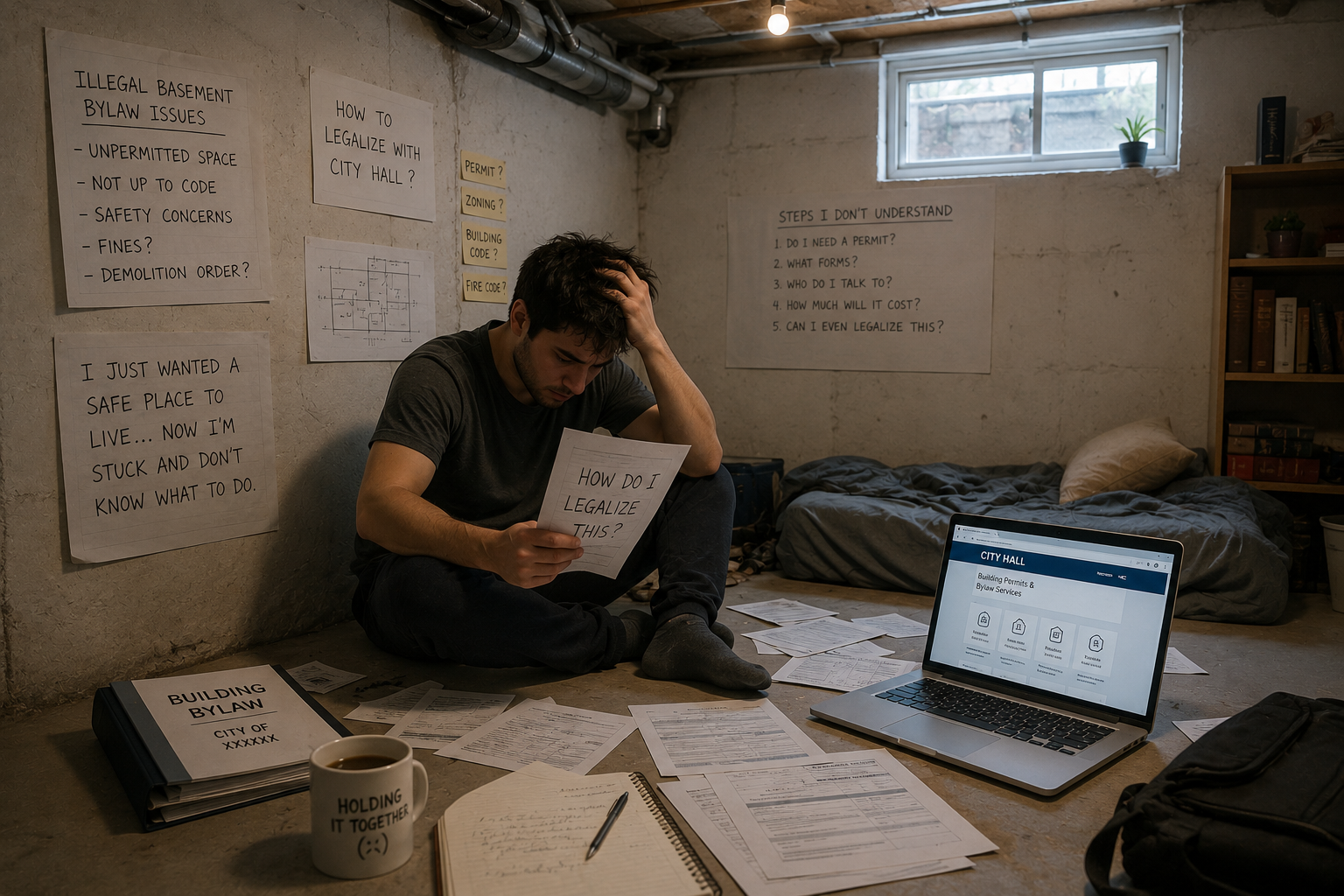
A stressed homeowner sits in an finished basement surrounded by permit papers and city hall documents, feeling overwhelmed and unsure how to legalize an illegal basement apartment while soft natural light creates a realistic and emotional atmosphere.
If you own a home in London and already have a finished basement that was completed without permits or proper approvals, you may be sitting on untapped rental income — but also serious legal and safety risks.
Across London, Ontario, many homeowners have basement spaces with bedrooms, kitchens, and bathrooms that are not legally approved as secondary suites. Most fail modern Ontario Building Code requirements for:
Fire separation
Soundproofing
Egress windows
Ventilation
Smoke alarms
HVAC systems
Electrical safety
Building permits
The good news is that many illegally finished basements can still be converted into fully legal, safe, and profitable basement apartments.
At Ayvaun Design and Build, we help homeowners in London transform illegal basements into legal secondary suites that comply with Ontario Building Code requirements and City of London regulations.
Whether your goal is:
Mortgage support
Monthly rental income
Student rentals near Western University or Fanshawe
Increasing resale value
Creating an in-law suite
Long-term real estate investment
our team manages the entire process from design and permits to inspections and construction.
Why Illegal Basement Apartments Are a Huge Risk in London, Ontario
A basement may look beautiful and finished, but that does not make it legal.
In Ontario, basement apartments must comply with the Ontario Building Code, Fire Code, ESA requirements, and municipal zoning rules.
An illegal basement apartment can create:
Fire hazards
Insurance claim denial
City fines and enforcement orders
Failed home inspections during resale
Tenant complaints
Liability in the event of injury or death
Forced removal of tenants
Local homeowners and renters in Ontario regularly raise concerns online about unsafe basement units with no egress windows, poor ventilation, and missing fire separation systems.
What Makes a Basement Apartment Legal in London, Ontario?
A legal basement apartment — also called a secondary suite or additional residential unit — must comply with:
Ontario Building Code
Ontario Fire Code
City of London zoning requirements
Electrical Safety Authority (ESA) rules
Plumbing and HVAC standards
The City of London generally requires permits and inspections for secondary suite conversions.
1. Fire Separation Requirements for Legal Basement Apartments
Fire separation is one of the most important parts of legalizing a basement apartment.
Ontario secondary suites commonly require:
Fire-rated drywall assemblies
Smoke-tight construction
Protected furnace rooms
Fire-rated doors
Fire caulking around penetrations
Proper ceiling assemblies
Ontario code guidance commonly references 30-minute to 45-minute fire separations between units depending on the construction pathway.
Many illegal basements in London fail because they were simply “finished” without proper fire-rated systems behind the drywall.
At Ayvaun Design and Build, we rebuild ceiling and wall assemblies correctly to help your basement pass inspections while maximizing ceiling height and appearance.
2. Soundproofing Between the Basement and Main Floor
One of the biggest complaints in basement rentals is noise transfer.
Professional basement apartment soundproofing may include:
Resilient channel systems
Acoustic insulation
Sound attenuation batts
Double drywall assemblies
Acoustic sealants
Duct sound isolation
Good soundproofing creates:
Better tenant satisfaction
More privacy
Higher-quality rental experiences
Improved resale appeal
Many homeowners in London underestimate how important soundproofing becomes once tenants move in.
3. Egress Windows and Safe Bedroom Exits
A legal basement bedroom must usually include a proper egress window large enough for emergency escape.
Ontario requirements commonly include:
Minimum opening size of 0.35 m²
No dimension smaller than 380 mm
Safe escape access
Window wells that allow full opening
If your existing windows are too small, we can enlarge foundation openings and install legal egress systems.
4. Smoke Alarms and Carbon Monoxide Protection
Legal basement apartments require:
Hardwired smoke alarms
Interconnected smoke alarms between units
Carbon monoxide detectors
Proper detector placement
These systems are essential for life safety and inspection approval.
5. Basement Apartment Ventilation Requirements in London, Ontario
Ventilation problems are one of the most common reasons basement apartments fail inspections.
Range Hood Venting
A basement kitchen should have proper exterior venting.
Improper recirculating systems can create:
Odours
Moisture issues
Grease buildup
Poor indoor air quality
We install properly ducted kitchen ventilation systems designed for code compliance and tenant comfort.
Bathroom Fan Venting
Bathroom exhaust fans must vent directly to the exterior — not into ceilings or floor cavities.
Improper bathroom venting often causes:
Mold growth
Moisture damage
Failed inspections
Condensation issues
At Ayvaun Design and Build, we design proper ventilation systems that protect your investment long term.
HVAC and Fresh Air Requirements
Ontario basement apartments often require:
Heat supply compliance
Proper return air systems
Fresh air ventilation
Smoke separation around duct penetrations
HVAC upgrades
Ontario guidance for secondary suites specifically highlights ventilation and HVAC compliance requirements for legal basement apartments.
6. Sprinkler Systems for Basement Apartments
Some legal basement projects in London may require sprinkler systems depending on:
House layout
Fire separation strategy
Existing construction conditions
Means of egress
Municipal requirements
If sprinklers are required, our team coordinates compliant installation and inspections.
Signs Your Basement Apartment Is Probably Illegal
Your basement likely requires legalization if:
Renovations were completed without permits
Previous owners finished the basement unofficially
Bedroom windows are too small
Kitchen venting does not exhaust outside
Bathroom fans vent into ceilings
Smoke alarms are battery-operated only
You can clearly hear conversations upstairs
There are no fire-rated doors
Electrical work was never inspected
There is no documented secondary suite approval
Even modern-looking basements may still fail Ontario inspections.
Why London Homeowners Are Legalizing Basement Apartments Now
Homeowners across London are increasingly converting basements into legal rental units because:
Rental demand remains extremely strong
Mortgage costs are higher
Student housing demand continues growing
Legal units increase resale value
Secondary suites create long-term monthly cash flow
A properly legalized basement apartment can generate substantial rental income while making your property safer and more valuable.
The Ayvaun Design and Build Process
Step 1 — Basement Inspection and Feasibility Review
We inspect your basement for:
Fire separation issues
Ceiling height problems
Ventilation deficiencies
Structural concerns
Egress limitations
Permit requirements
Rental optimization opportunities
Step 2 — Design and Permit Planning
We create a code-compliant renovation plan focused on
Legal compliance
Rental appeal
Modern layouts
Soundproofing
Storage solutions
Durable finishes
Tenant comfort
Step 3 — Permit Applications and City Coordination
We help manage:
Permit drawings
Building permit submissions
Inspection scheduling
Communication with the City of London
Step 4 — Construction and Legalization
Our team handles:
Framing
Fire-rated assemblies
Drywall
Soundproofing
Electrical
Plumbing
HVAC
Ventilation
Kitchens
Bathrooms
Flooring
Finishing work
Step 5 — Final Inspections and Legal Approval
We help guide your project through inspections so your basement is ready for safe legal occupancy.
Why Homeowners Choose Ayvaun Design and Build
Homeowners choose us because we focus on:
Ontario code compliance
Clean modern basement designs
Legal secondary suites
Professional project management
Permit guidance
High-quality workmanship
Long-term durability
Rental-focused layouts
Tenant comfort and safety
We understand both the technical building code requirements and the features renters actually want.
Frequently Asked Questions
Can I legalize a basement that was finished years ago?
Yes. Many homeowners legalize basements that were renovated without permits or completed by previous owners.
Do I need permits to legalize a basement apartment in London, Ontario?
Yes. Secondary suites generally require permits and inspections through the City of London.
Is soundproofing required?
Sound attenuation between units is commonly required or strongly recommended for legal secondary suites.
Does a basement kitchen need exterior venting?
Proper kitchen ventilation is commonly necessary for code compliance and indoor air quality.
Can Ayvaun Design and Build handle the full process?
Yes. We manage design, permits, renovations, inspections, and code compliance from start to finish.
Ready to Turn Your Illegal Basement Into a Legal Rental Apartment?
If you already have a finished basement that may not be legal, now is the best time to correct the issues before renting it out.
Ayvaun Design and Build helps homeowners across London create safe, beautiful, code-compliant basement apartments designed for long-term rental success.
Contact Ayvaun Design and Build Today
Book your basement assessment and find out:
What is required to legalize your basement
Which upgrades are necessary
What permits and inspections are needed
How much rental income your basement may generate
How we can transform your basement into a safe, modern legal suite
Fill Out Our Contact Form Today
A legal basement apartment is not just a renovation.
It is an investment in:
Rental income
Property value
Tenant safety
Long-term financial stability